We answer general questions about the ordering process and common concerns about using our products. Regardless of whether you have questions about your order or how best to use our products - here you will find quick and uncomplicated answers to the most important topics.
Helpful answers to specific products or product categories that can help you with your purchase decision can be found directly in the respective category or on the product pages.
As your order is automatically processed and made ready for dispatch, it is unfortunately no longer possible to change or cancel it. Unfortunately, it is also no longer possible to change the billing or delivery address. Please check your order carefully before clicking on "Order with obligation to pay". However, you can exercise your right of withdrawal at any time and refuse to accept the package or return it to us within 14 days.
To receive the relevant payment information from Unzer, please contact Unzer's customer service. Only they can change your email address accordingly. Unfortunately, we, Steinbach International GmbH, have no possibility to change the address at Unzer. If you paid via PayPal, the e-mail address stored in your PayPal account was used.
As your order is automatically processed and made ready for dispatch, it is unfortunately no longer possible to change or cancel it. Unfortunately, it is also no longer possible to change the billing or delivery address. Please check your order carefully before clicking on "Order with obligation to pay". Please contact us via our contact form to possibly apply changes.
For ecological reasons, we do not print the invoice and enclose it with the package. The package therefore does not include a printed invoice as standard. After the goods have been dispatched, we send the invoice by e-mail to the e-mail address used in the webshop. Customers who have their own customer account in the webshop can also call up the invoice from their customer account at any time.
After completing your order, you will receive the associated invoice information by mail. Please use only the bank data and payment references specified on the invoice.
The payments from Unzer are read automatically and can therefore only be assigned with the correct payment reference and amount. If these do not match, it is possible that the amount will be transferred back. If you have any questions about this, please contact Unzer's customer service directly.
If you have paid via PayPal, the invoice amount has already been authorized in PayPal when you completed your order and no further action is required on your part.
Please contact the Unzer customer service. It may be that your payment was not processed correctly. There may simply have been an overlap between your payment and the issuance of the reminder.
We deliver parcels via DPD or the Austrian postal service.
Pallet shipments are delivered via the forwarding companies Schenker, Dachser or Gebrüder Weiß.
An automatic tracking link will be sent by email after the goods have been dispatched. We try to dispatch your goods as quickly as possible, but we ask for your understanding that there may be delays, especially during the high season. If your order includes a polystyrene pool, there may be waiting times of up to 6-8 weeks, as the pool liners are specially tailored to the customer's wishes and are therefore a personalised product.
You can check the current status of your order via the following link: https://www.steinbach-group.com/en/orderstatus. Please note that the order status can be viewed from approx. 2-3 hours after receipt of the order.
You have received a tracking link from the shipping company, open it. If you receive your goods from the forwarding company Bexity, enter your reference number in the necessary field for tracking the shipment. The reference number was either sent to you by e-mail or you can also find it in the link sent to you under the parameter "refnum=". Then click on the "Status abrufen" button and the shipment tracking will open after you have requested your postal code.
You can check the current status of your order via the following link: https://www.steinbach-group.com/en/orderstatus. Please note that the order status can be viewed from approx. 2-3 hours after receipt of the order.
Within the legal right of withdrawal, you can return the goods free of charge. If you have a customer account in the webshop, please register the return via your customer account. To do this, you can select the order in your customer account and select the "Returns" field under "Actions". You can select the items you would like to return and will receive a GLS label by e-mail after completion. This e-mail also contains a description of how to proceed. If you do not have a customer account in the webshop, please register your return using this link. Please have the following information ready: Order number (You received this by e-mail after completing your order. It is a 10-digit alphanumeric value beginning with W.), invoice Surname (the surname with which the order was originally placed/the surname of the invoice recipient) and e-mail address (the e-mail address with which the order was originally placed).
Please note that the processing of the return may take some time. You can track when the goods have arrived at our house via the tracking link. Please allow around 7 working days for the goods to be processed by us and for the goods to be recorded. After the return has been successfully checked, your money will be refunded via the original payment method. You will receive an email shortly after the return has been recorded with the corresponding credit, which will be transferred back accordingly.
Please submit your complaint via the contact form, and our staff will attend to your request as soon as possible.
Discount yes or no? If there are promotions in our web store, a discount will be displayed on the product and automatically deducted from the order. If no promotion is known, unfortunately no discounts can be granted/booked and no price adjustments can be made. Our offers are updated daily and are dynamic, which can occasionally lead to price adjustments.
The promotional periods for certain discount or voucher codes, which can be entered in the shopping cart, are always indicated directly with the respective code.
No, Steinbach is not a partner of the device rescue bonus, as our products are not currently covered by this bonus.
The repair bonus is a funding campaign from the Ministry of Climate Protection that allows you to save up to 50% of the eligible gross costs. A maximum of 200 euros for repairs and 30 euros for cost estimates are eligible.
This is how it works:
Repairs to electrical and electronic appliances are eligible. You can find a complete list of eligible appliances at www.reparaturbonus.at.
With the repair bonus, you not only save money, but also extend the service life of your appliances and reduce waste - a benefit for your wallet and the environment!
Yes, the delivered parcel must be checked for damage immediately!
If there is any transport damage, please make a note of this immediately and before you sign for acceptance of the goods.
The invoice payment method is processed by our payment service provider Unzer.
During the ordering process, Unzer carries out an automatic risk and credit check. If this check is not successful, the ‘purchase on account’ payment method will unfortunately not be available to you.
Please note:
Purchase on account is possible for orders with a minimum value of £50 and a maximum value of £3,500.
If your shopping basket is:
this payment method will not be displayed at checkout. In this case, you can of course use one of the other available payment methods.
The product's item number is now listed in the “All Technical Details” section on the respective product page. This section can be opened by clicking the drop-down box below the technical information.
In order to be able to differentiate between INTEX and Steinbach articles internally, we put a 1 in front of INTEX article numbers (Steinbach articles begin with 0). The parts are still identical to those in your instructions.
You can order stocked and available spare parts directly in our online shop. There you can find all product information and prices. We recommend that you use the part reference from the operating instructions of your product. This will ensure that you purchase the right and correct spare part.
All INTEX inflatable items (Easy Set Pools, air beds without built-in pump, air mattresses, etc.) should never be inflated with external compressors. Please always use a pump suitable for this purpose and pay attention to the information in the operating instructions of the respective product.
The filter system should always be the first part in the water treatment system. The rest of the pool accessoires should only be connected after the filter system. A heat pump should ideally always be the last part in the water treatment system, so that the filtered, treated water flows through the heat pump and the path of the heated water into the pool is as short as possible.
Above-ground or inflatable pools are pools that are set up freely in the garden.
The preparations are completely straightforward, as no earthworks are required for this type of pool. Nevertheless, a level and stable surface is also a prerequisite here. If the ground is slippery, the frame of the above-ground pool can slip away. The above-ground pools must not be sunk into the ground.
If the above-ground pool has a frame, the frame must be at the same level as the pool floor and therefore level.
You can find more information on choosing a location and preparing the ground in the relevant operating instructions for your product.
The pool must not be placed on uneven or sloping ground. The surface must be flat and level and free from branches, stones, sharp and pointed objects. The place must be stable and weight-resistant (not on a balcony or terrace). The above-ground pool must not be buried in the ground, not even partially. The best location is in a sunny position. Also remember to leave a safety distance of 1.5 - 2 meters around the pool! This serves, among other things, to protect children so that they cannot climb up anywhere and fall into the pool.
No, floor protection mats are not suitable for preparing the surface of pools. Floor protection mats made from materials such as: PE, are not stable enough. They serve as additional protection and comfort around the pool area. They can be placed under ladders, for example.
Yes, Intex above ground pools can be operated with salt water. At the end of the season, clean the salt water system with clear tap water and allow the pool to dry completely.
Above ground pools are not frost-proof and therefore not winterproof. The pool sets should be stored dry at 5°+. Please make sure that the liners and poles are well dried out before storage to avoid mould and rust.
If the weld seam of a pool liner opens, this is a manufacturing defect. In diesem Fall wird die Poolfolie innerhalb des Garantiezeitraums ausgetauscht. Please refer to the warranty information in the operating instructions and send your request to our Helpdesk.
Depending on the model, the steel shell can either be completely sunken or partially sunken, but can also be free-standing. The steel wall pool is best placed on stable ground and on a horizontal, level and accessible surface. If you can stand on one leg without sinking in, the floor is stable.
You can find more information on preparing the substrate in the relevant operating instructions.
Yes, all steel wall pools are winter-proof and can therefore be left standing in winter. However, please note that the tips on correct winterization should be followed exactly.
The pool should be set up at outside temperatures between at least 15°C and a maximum of 25°C, as the pool liner is easiest to work with in this temperature range. At cooler temperatures, the liner contracts, while at higher temperatures it tends to expand. Within the optimum temperature range, the liner can be easily formed into the desired shape. If the installation is started at lower temperatures, the film can be more difficult to process and may appear too small.
It is essential to set up the pool when there is no wind. Gusts of wind make the construction of the steel wall difficult and can cause damage.
The use of steel wall pools with salt water can lead to rust problems that are not covered by the warranty.
The film must be produced higher so that it can be laid over the steel wall (i.e. it overlaps it). The overhang of the foil on the outer wall can be irregularly large despite correct tensioning. The excess film can be cut away after approx. 14 days, by which time the material will have fully expanded. Follow the instructions in the enclosed operating instructions carefully beforehand.
Most steel wall pools can be partially or completely installed in the ground. Please refer to the respective operating instructions.
To ensure that the pool remains stable, add the backfilling from an installation depth of 30 cm.
Backfilling is only necessary if the pool is to remain without water for a longer period of time. Depending on the ground conditions and installation depth, a so-called slope failure can occur, which damages the pool wall. However, this situation can be prevented by backfilling with concrete.
Due to the current swimming pool standard, a safety ladder must be included in the scope of delivery for above-ground pools with a height of 84 cm or more that cannot / must not be buried.
Due to the material thickness of the steel jacket, the skimmer would have to be supported from the outside. Furthermore, this modification of the steel jacket will invalidate any warranty.
We recommend cross-linking and filling over the entire surface. This will give you a pressure-resistant surface.
The technical shaft should be at least 150 x 150 cm, but we recommend the complete pool width x 150 cm.
Whirlpools must be installed outdoors. A level and stable surface is required. The area must be weight-resistant (not on a balcony or terrace). The surface must be free of branches, stones, sharp and pointed objects. Before installation, make sure once again that the hot tub will be standing on a completely flat, level surface, as otherwise the connections may not seal 100%.
If your Intex spa control unit does not establish a WiFi connection, there may be various causes. Here you will find an overview of possible solutions:
1.) Check the compatibility of the WiFi network
Important: The Intex Spa App only works with 2.4 GHz networks.
Many modern routers transmit both 2.4 GHz and 5 GHz frequencies. The control unit only works with 2.4 GHz WLAN networks - not with 5 GHz. Make sure that your smartphone and the spa are connected to the 2.4 GHz network.
2.) Optimize signal strength and position
3) Adjust router settings
Many routers support dual band (2.4 GHz and 5 GHz) and often automatically connect devices to 5 GHz. There are two options to ensure that the Whirlpool can be paired with the correct 2.4 GHz network:
Option 1: Deactivate 5 GHz: Temporarily disable the 5 GHz band to force pairing with the 2.4 GHz network.
Option 2: Rename networks, e.g. “MyWLAN_2.4GHz” and “MyWLAN_5GHz”, to select the correct WLAN.
In the event of connection problems, a router restart often helps: briefly disconnect the device from the power supply and reconnect it. Further details can be found in your router manual. If difficulties persist, please contact your internet provider.
4) Use the correct app
Check that you are using the correct app for your whirlpool.
The correct app depends on the model year of your spa. Check the model designation on the back of your control panel.
If your model name ends in "TY", then use the app: Intex Link
If your model name does NOT end in "TY", then use the app: Intex Link - Spa Management
If you have the feeling that air is escaping from your whirlpool liner, this can have various causes. This is not always the result of a hole in the liner.
Cause 1:
During initial commissioning or after winterising, creases can occur in the hot tub during storage or when the pool is folded up. Especially when stored in cool rooms (e.g. cellars), the material needs time to expand and adjust to the ambient temperature when it is first inflated. For this reason, air often has to be pumped in during the first use. This effect has a physical cause and is therefore not a defect.
Solution: Inflate more often, especially at the beginning.
Cause 2:
It may appear that your spa has lost air overnight. This is due to the large temperature differences between day and night. During the day, when it is warmer, the air inside the whirlpool foil expands. At night, when temperatures drop, the air contracts, which can make the hot tub appear slightly ‘softer’ in the morning. As soon as the temperature rises again during the day, the air inside the whirlpool foil expands again and the whirlpool returns to its original shape. This effect is also illustrated in the enclosed operating instructions in the ‘Inflation’ chapter. This effect has a physical cause and is therefore not a defect.
Solution: Pump air more often, especially at the beginning.
Cause 3:
If air escapes from the pool liner without a hole being visible, it may be that the pressure relief valve is not properly tightened or is not sealing properly due to dirt particles. This can cause air to escape gradually.
Solution: Please check the air valve. Further information can be found in the section ‘Spa air valve attachment’ in the enclosed operating instructions.
This can have two causes:
Cause 1: The hot tub has been exposed to direct sunlight for a longer period of time. The air inside expands and the whirlpool tub (cover) bulges.
Solution: Please check the air pressure and deflate if necessary. This process is particularly important in hot weather to avoid damage!
Cause 2: Stabilising threads inside the whirlpool (cover) are torn. This causes the cover to lose its shape. Unfortunately, this is irreparable.
Do not expose the spa to direct sunlight for a long period of time. Please check the air pressure and release some air if necessary. This procedure is very important, especially in hot weather, to avoid damage!
First of all, make sure that both the whirlpool tub and the control unit are on a level surface and at a suitable distance from each other to avoid differences in level.
Tighten the inlet and outlet connections and ensure that the O-rings and seals are in the correct place, cleaned and undamaged. Check the connections for cracks and replace defective parts if necessary. To improve tightness, O-rings can be lightly lubricated with detergent, water or Vaseline.
Intex whirlpools are not winter-proof and should not be used at temperatures below 5 °C. Although some models have anti-freeze protection that warms the water temperature slightly if there is a risk of frost, they are not designed for extreme cold and must be dismantled and stored frost-free if there is a risk of frost to prevent damage.
Switch off the whirlpool tub and disconnect the mains plug of the control unit. Ensure that the cover grille of the filter cartridge unit is clean and free of obstructions. Clean or replace the filter cartridge, see section ‘Maintenance and storage’ in the operating instructions. Ensure that the inlet and outlet connections on the whirlpool tub and filter pump are not blocked. If necessary, rinse the control unit with the garden hose (please note the connections). Ensure that the spa water is properly sanitised so that the filter element remains clean and does not clog.
E90 may appear if the cartridge filter container is fitted to the wrong connection. The tank must be fitted to the lower connection - the ‘suction grille’. The water is sucked in there, the dirt remains in the cartridge and the clean water is pumped through the motor block. The water flows back into the tank through the inlet nozzle. If the container is incorrectly connected to the inlet nozzle, dirt may enter the pump motor through the intake grille. Hair can become wrapped around the pump rotor and the error code E90 is triggered.
If the ambient temperature is below 4ºC, we recommend not using the whirlpool. Switch off and unplug the control unit. Add some warm water to raise the water temperature of the whirlpool to over 5°C (41°F). Then press the button to heat the water to the desired temperature.
Switch off and unplug the control unit. When the water has cooled down, turn on the FI and restart everything. Turn off the heating. Then press the Filter and Bubble buttons to lower the water temperature.
Switch off and unplug the control unit. Turn on the FI again and restart everything.
The unit needs to be checked/repaired.
Press the water filter button to activate the filter pump again. After 72 hours of continuous heating operation, the pump automatically switches to idle mode. The quick heating and water filtration functions are deactivated.
Remove the electrolytic storage cell for inspection and cleaning if necessary. Use salinity test strips to check the value of the water. Add salt. See “Salinity Information”. Make sure the cell's cable is securely plugged into the socket. Replace the memory cell if necessary.
If the salt content is too high, drain some of the pool water and fill it up with fresh water. Remove the electrolytic storage cell for inspection and cleaning if necessary. Use salinity test strips to check the value of the water. If the salt content is too high, drain some of the pool water and fill it up with fresh water. Make sure the cell's cable is securely plugged into the socket. If necessary, replace the memory cell.
Your spa liner may have a hole in it. The first step is to find the damaged area. This can be on the inside or outside of the spa liner.
Inside of the whirlpool film:
Switch off all functions of the hot tub and wait until the water level is calm. If the hole is on the inside, you will notice air bubbles on the surface of the water. You have now successfully located the hole!
Solution: Use the repair patches supplied and an underwater adhesive. Follow the instructions for gluing with underwater adhesive.
Outside of the whirlpool liner:
You will need a bucket of soapy water and a sponge or spray bottle for the repair. Soap the sink thoroughly. Air bubbles will form at the damaged area - you have now successfully localised the hole!
Solution: Switch off the device completely, let all the air out of the whirlpool tub and clean the damaged area thoroughly so that it is free of grease and dirt. Dry the area carefully and apply a thin layer of adhesive from the repair kit around the leak. Cut the patch to the right size, stick it over the crack and make sure that there are no air bubbles. Press the patch firmly into place and allow the adhesive to cure in a dry environment for 24 - 48 hours before using or inflating the spa again.
Please note:
If the leak is located at a seam, it is unfortunately not possible to seal it with adhesive. It is almost impossible to permanently seal the hole at seams. In this case, you will need a new pool liner.
Check the pressure relief valve for leaks. Whirlpools from 2018 have a pressure relief valve. It is possible that the pressure relief valve does not seal due to dirt particles and does not close properly. As a result, air can escape there. Open the cap, unscrew the pressure relief valve with the wrench (included in the scope of delivery) and remove it, check it for dirt particles. Check the pressure spring and seal for accuracy of fit, carry out steps 1+2 in reverse order.
Tighten the inlet and outlet connections. Cover the O-ring with Vaseline to make it watertight. Remove the grille inside the spa with a screwdriver, make sure the inlet/outlet O-ring is in place, cleaned and not broken. Check the connections for cracks. Replace the defective parts if necessary.
Plug the control unit directly into a socket and do not use extension cables or distributors. Check your house wiring for overload, the socket may have a defect. Contact a qualified electrician. Reset the residual current circuit breaker.
Make sure that the SPA is plugged in and turned on and that the control panel power plug is securely attached to the control unit. Check the power source and reset the FI switch.
1. Turn off the spa control unit.
2. Connect the drain valve adapter to a garden hose. Place the other end of the garden hose in a suitable place for water disposal.
3. Remove the cap from the outer drain valve and attach the drain valve adapter to the drain valve.
4. Open the cover for the drain valve inside the whirlpool tub. The water begins to flow out through the garden hose.
5. When the water has drained out, disconnect the whirlpool control unit from the wall of the whirlpool tub. Lift the whirlpool tub wall on the opposite side from the drain to direct any remaining water down the drain and allow you to completely drain the whirlpool.
6. Attach the filling hose to the air blower valve on the control unit.
7. Turn on the whirlpool and press the button. Align the filling hose with the inlet/outlet of the spa pool and the spa control unit so that the water in the pipes dries out.
8. Use a clean towel to soak up the remaining water and moisture from spa and control unit.
9. When the whirlpool is empty, remove the filter housing from inside the spa and clean or replace the filter cartridge. Only use commercially available bathroom cleaners for cleaning. Rinse the whirlpool well with clear tap water.
10. Make sure that the control unit and the spa tub are thoroughly dry.
11. After the spa is completely dry, vacuum out any remaining air. Note that some air still remains in the tub. The tub should not be completely "evacuated" so that the air and jet lines are not compressed.
12. Fold the whirlpool loosely and avoid sharp corners to prevent damage. Packing into the bag may require 2-3 people.
NOTE: The included caps can be used to cover the water inlet and outlet fittings inside the spa. This prevents water from flowing out.
Depending on the model, Intex whirlpools are WLAN-capable from 2021.
The Intex whirlpool models are not retrofitted or upgraded with WLAN by Steinbach. Retrofitting models from 2020 without Wi-Fi function to a version with Wi-Fi support would require replacing the main circuit board and the display with the corresponding components of the models from 2021 onwards. Retrofitting is therefore only possible with considerable intervention in the control unit. This is not recommended or implemented by Steinbach.
All INTEX whirlpool models should never be inflated with external compressors or pumps. Please only use the control unit supplied for this purpose. Please also note the information in the operating instructions of the respective product.
The outdoor whirlpools are not winterproof. In areas where there is a risk of frost, the spa and all associated components should be drained, cleaned, disassembled and correctly stored indoors if the temperature drops below 5°C.
This case normally only occurs with the “Intex Link - Spa Management” app.
Please note the following requirements when creating your password for registration:
For more information on connecting to the app, please also read our blog post on this topic.
If you are still having difficulties creating your account, please send the following information to our service team (helpdesk.steinbach.at) so that we can create an account for you:
Your devices now meet the requirements for successful pairing.
Please contact the service team (helpdesk.steinbach.at), as the control panel probably needs to be replaced.
The operating system of your cell phone probably no longer supports downloading the “Intex Link - Spa Management” app, please contact the service team (helpdesk.steinbach.at). In this case, you will probably need a new control panel.
The old control panel can only be used with the old “Intex Link - Spa Management” app (predecessor app). The new control panel can only be used with the new “Intex Link” app (successor app).
Please download the successor app “Intex Link” from the Playstore or AppStore and register again in the successor app. You can transfer the login data from the previous app.
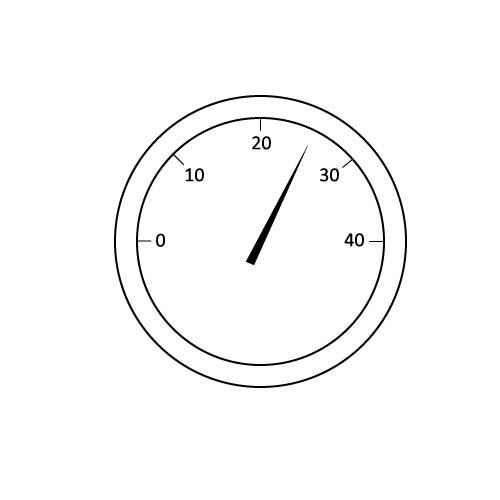
The liquid in the pressure gauge is not water, but a stabilising liquid (similar to glycerine). This liquid causes the pointer to remain stationary even under strong vibrational loads (which occur with heat pumps).
This is condensation water that drips off automatically.
Use the 50 mm / 38 mm adapter supplied. You can attach a 38 mm swimming pool hose using hose clamps and Teflon tape.
All Steinbach air heat pumps are equipped with a titanium heat exchanger and can be used for salt water pools with a salt concentration of up to 0.5 %.
Yes, the air source heat pump is always integrated into the existing filter circuit after the filter system. Note that the filter pump has the required minimum water flow rate.
The most powerful heating is of no use if the following factors are not taken into account: Pools with a cover, e.g. solar cover, have a lower heat loss. Insulated pools have a much lower heat loss than pools without insulation. The filter runtime and thus the operating time of the additional heating must be taken into account. Wait 24 - 48 h until the set temperature is reached. The higher the temperature difference between the pool water and the outside temperature, the higher the energy loss. Take external influences into account. Heat loss can occur due to cold or strong wind. Minimise the flow rate of the heat pump within the minimum water flow rate of (depending on the heat pump model*) , so that the residence time in the heat pump is longer. *4 m³/h-6 m³/h = 049202, 6 m³/h-8 m³/h = 049207
The volume of the heat pumps depends on the type and output. You will find the technical data for each individual product. Heat pumps have become increasingly quieter in recent years and are currently between 30 and 40 dB(A). For example, 30dB(A) corresponds to the sound of your own breathing and 40dB(A) to a living room with closed soundproof windows.
EEb means that the water flow is insufficient. Raise the water flow using a bypass kit that regulates the heat pump.
EEc means that the ambient temperature is below 15°C. Wait until the ambient temperature increases. In the cold seasons autumn/winter, the heat pump must be dismantled.
The water that forms in the heat pump is called condensate. This is the moisture contained in the air that condenses when it comes into contact with certain cold components inside the heat pump. The more humid the outside air, the more condensate the heat pump produces (your unit may produce several litres of water per day). The water collects at the bottom of the heat pump and escapes through the drain provided.
The second cable gland enables the direct connection of a further electrical consumer to the connection box of the heat pump. The direct connection may only be carried out by a qualified electrician, taking into account the maximum power consumption and dimensioning of the cable cross-section.
The solar collector must be emptied at the latest before the first frost and stored in a frost-proof place (≥ +5°C) without direct sunlight.
1. check that the fill level of the pool is below the inlet nozzle. If not, close the inlet nozzle with a plug.
2. Fully unscrew the inlet and outlet screw rings. Caution! Residual water in the hoses will leak out.
3. Pull the sleeves and pipes out of the inlet and outlet.
4. Empty the product completely until there is no more water in it.
5. clean the inside and outside of the product using only a standard bathroom cleaner, clean tap water and a lint-free cloth. Aggressive cleaning agents can damage the product. Dry the product with a lint-free cloth.
6. allow the product to dry completely. If there is water inside the appliance and it freezes in winter, the expansion at low temperatures could damage the solar chambers of the appliance.
7. store the product in a dry and frost-proof place (≥ +5°C) without direct sunlight.
The solar mat must be emptied at the latest before the first frost and stored in a frost-proof place (≥ +5°C) without direct sunlight.
1. Check that the fill level of the pool is below the inlet nozzle, otherwise close the inlet nozzle with a plug
2. empty the product completely until there is no more water in it. Caution! Residual water in the hoses and in the solar mat will leak out.
3. Only clean the inside and outside of the product with a standard bathroom cleaner, clean tap water and a lint-free cloth. Aggressive cleaning agents can damage the product. Dry the product with a lint-free cloth.
4. Allow the product to dry completely. If there is water inside the appliance and it freezes in winter, the expansion at low temperatures could damage the solar chambers of the appliance.
5. Ensure that the product is only rolled up slightly so that it is not damaged by kinks.
6. store the product in a dry and frost-proof place (≥ +5°C) without direct sunlight.
Tip: To prevent the product from sticking together after rolling up, you can sprinkle some talcum powder on the mat.
Place the solar heater in a way that it is standing stable and straight on the ground and the top is directly exposed to the sun. The top of the product must always face the sun and must not be covered or in the shade.
The product is designed exclusively for placement on the ground. Never place the product above the water level.
Place the product at least 1 metre away from the pool and leave enough space for maintenance and cleaning work.
The solar heater must be installed last in the circuit so that filtered water enters the pool directly heated. It should be positioned as close as possible to the water inlet nozzle at a distance of at least 1 metre to reduce heat loss.
Yes, the solar heaters are designed so that several heating elements can be connected together. Please note that the circulation capacity of the filter system will be reduced if several heating elements are connected. We therefore recommend increasing the daily circulation rate in order to filter your pool water optimally. With a large number of connected solar heaters, it may be necessary to switch to a more powerful filter pump to ensure the circulation capacity for the necessary water treatment.
No, solar collectors and solar mats must not be installed above the water level of your pool - for example, not on roofs or walls.
The reason: For every meter of height difference between the top edge of the solar system and the filter system, the pressure in the filter tank increases by around 0,1 bar. This additional pressure can significantly impair the performance of the filter pump and, in extreme cases, lead to damage to the filter tank, the solar system or leaks at the connections.
Place the solar system directly next to the filter system at ground level to ensure safe and efficient operation.
The solar mats must be connected after the filter system and then the filter system must be switched on.
The solar mats and solar collectors only function with solar radiation, the black containers/ mats are heated exclusively by solar radiation. The pool water must be pumped through the mats/collectors with the filter system, which is then heated there.
Check that all connections are correctly connected. Switch on the filter system. Use the maximum possible solar radiation and increase the running time of the filter pump. Cover the pool overnight to prevent heat loss.
In many solar systems, the diameter for the water flow is reduced and with it the entire circulation capacity of the existing filter system. To eliminate this potential problem in advance, we recommend using a bypass set. This not only regulates the heating output, but also specifically controls the water flow.
Included in the delivery is a lugged 38 mm hose with a length of 100cm, with which you can easily make the connection.
Up to 6 mats - please refer to the instruction manual for more detailed information.
In principle, it is possible to add Filter Balls to any conventional sand or cartridge filter system without any problems.
For cartridge filter systems, please use the filter net included in the scope of delivery. Please refer to the technical data specified in the online shop for the correct filling quantity of filter medium for your model.
Please also note that you must not backwash with filter balls, as this can cause filter balls to get into the system and cause damage. When filling a two-chamber system, it is important that no filter balls get into the fresh water area. This could otherwise lead to blockages in the filter system and in the pipework.
If filter balls are used as a filter medium, do not use flock cartridges for water treatment.
Depending on the degree of soiling, the filter medium should be cleaned with a garden hose approximately every fortnight and then dried in the sun.
We do not recommend cleaning Filter Balls or Filter Wool Flakes in the washing machine or tumble dryer. As they shrink considerably when wet, they could get behind the drum and damage the machine.
Backwashing would pull the Filter Balls or filter Wool Flakes into the lines and clog them. The resulting pressure in the filter tank would be too high and could damage the filter tank.
Preparation:
1. make sure that the power cable of the pump is disconnected from the mains.
2. use a PH1 Phillips screwdriver to remove the screws from the timer cover and remove the cover.
3. pull out the plastic strip that can be seen underneath the battery.
4. screw the cover back on. The timer's memory backup function is now activated.
Caution: If the steps described below are not carried out, the timer will still function correctly. However, if the power supply is interrupted, the stored filter run times will be deleted.
Setting the timer:
1. connect the mains plug of the pump to the power supply. The runtime display flashes (if the battery is inserted, the last selected runtime is displayed).
2. press the "Timer" button several times until the LED for the desired running time lights up.
3. switch the pump on by pressing the "ON/OFF" button on the timer. From this point on, the pump runs and deactivates automatically after the selected running time. The timer reactivates the pump every day at the same time for the same running time (once every 24 hours).
1. Insert two of the filter arms into the filter screen until they click into place and check that the filter arms are firmly seated.
2. insert the riser pipe incl. filter screen with the two pre-assembled filter arms into the filter bowl.
3. insert the remaining filter arms into the filter screen inside the filter bowl until they click into place and check that the filter arms are firmly seated.
4. position the filter sieve in the middle of the base of the filter bowl.
All Steinbach and INTEX filter systems (sand filter systems, cartridge filter systems & filter pumps) are suitable for salt water as long as the salt content in the water is below 0.5 % (salt electrolysis). Before winterising, clean the filter system thoroughly with standard bathroom cleaner, clear tap water and a lint-free cloth.
The sound pressure level may vary from model to model. Please refer to the ‘Technical data’ section in our online shop for the sound pressure level of your system.
If the pressure is too low, the pre-filter is dirty and the pump is not getting enough water. Clean the pre-filter and check the suction line and the water level.
If the sand is newly filled in, or the sand is already very fine due to the use of several seasons, small sand particles may still be present. The solution is to backwash several times until the water comes out clear, or to fill in new sand.
No, the salt system must NOT be positioned in a technical shaft, as the high humidity can interfere with its function.
Check that all connection lines are open (gate valve, by-pass set). Remove dirt from the housing of the storage cell. Bleed the air from the filter pump. Check the water connection lines for correct installation according to the operating instructions and clean and check the flow sensor for dirt or deposits.
Check the titanium and eco-electrodes for dirt and deposits (lime, salt). Clean them by soaking the cells in vinegar water. The storage cells are a wearing part that can be replaced regularly. To do this, disconnect and unscrew the cell. First soak the complete plastic part including the cells inside in vinegar for several hours. Rinse it with clear water and reinstall it. Check the flow sensor for dirt or deposits and clean it. Plug the sensor firmly into the socket provided. Use salt content test strips to check the value of the water. Add sufficient salt to the pool according to the instructions. The salt generators of the last few years required approx. 3 kg/m³ of water salt, which corresponds to 3000 ppm. The salt water system requires a uniform salt concentration in the entire pool water. Therefore, there must be sufficient circulation and dissolution of the salt before the unit is switched on.
If the salt content is too high, drain off part of the pool water and fill it up with fresh water. Check the titanium and eco electrodes for dirt and deposits (lime, salt), clean them by soaking the cells in vinegar water. The storage cells are wearing parts that can be replaced regularly. To do this, you need to unplug and unscrew the cell. Soak the entire plastic part including the internal cells in vinegar for several hours. Then rinse with clean water and put it back in. Use salinity test strips to check the value of the water. The salt water system requires an even salt concentration throughout the pool water. Therefore, sufficient circulation and dissolution of the salt must be given before the device is switched on.
Check the power supply in your socket, if necessary try another socket. Check the power plug or connection cable for damage.
Clean the electrode of your pool's salt water system with vinegar or with a mild descaling agent that you dilute with water, depending on the product used. Important: Do not use hard objects (knives, etc.) to remove limescale from the electrode, as this could damage it.
This can sometimes happen due to production reasons; please refer to our notes in the operating instructions. Weak dripping is best eliminated by wrapping Teflon tape over the affected connections.
It is best to use our 2" double nipples (art.no. 062085). Please note that you also need flat gaskets for sealing (art.no. 0409331).
Yes, if the pipe has the right diameter for the adhesive sleeve, this is possible. Make sure that you fix the pipe sufficiently (e.g. with pipe clamps) so that no impermissible forces are transferred to the transition fitting.
It is best to use our 2" double nipples (art.no. 062085) - Please note that you also need flat gaskets for sealing (art.no. 0409331).
This can sometimes happen due to production reasons; please refer to our notes in the operating instructions. Weak dripping is best eliminated by wrapping Teflon tape over the affected connections.
This is due to the fact that the seals are lubricated inside with a lubricant - on the one hand for sealing and on the other hand so that the components can be adjusted more easily (plastic on plastic). After the first couple of turns, the lever will turn smoothly.
Yes.
The mains supply of the UV disinfection system can be combined with an external timer. Ensure that the water flow in the filter system is guaranteed while the system is in operation.
The UV disinfection system has a safety switch. This switch interrupts the power supply to the lamp when it is not installed. The function of the lamp can only be checked when it is installed.
If it is not possible to visually check the UV disinfection system when it is installed, the function can be checked using a commercially available electricity consumption meter for sockets.
Yes, the UV system can be used with an external timer.
For safety reasons, the external timer must first be connected and then the lid screwed on. As a result, the safety switch is released.Otherwise, the safety switch integrated in the screwed lid prevents the lamp from supplying power to the external timer.Please note: Every time the lamp is disconnected from the power supply, wait 2-3 minutes for the safety switch to release the power supply again.
Only then can the lamp be reactivated by turning the lid open and closed.
Set the timer on the filter pump to 24 hours. The filter pump is started and stopped with the external timer.
Make sure that you have previously activated the memory backup function of the timer. The following steps must be observed:
The memory backup function draws the required energy from the pump battery when the mains supply is switched off. Please note that the battery life - depending on the daily operating time - may be limited to a few weeks.
Pre-switch the external timer. The filter pump is started and stopped with the external timer.
No, the filter system may only run when the pool is not in use. On the one hand, there is a risk of injury from the suction nozzle, on the other hand, dirt particles are swirled around during use, which the system cannot filter.
The filter system should circulate your pool water at least twice a day. Our Comfort 75 filter system, for example, manages approx. 8,000 litres per hour and can therefore completely circulate a pool with 19,000 litres once in just under 2.5 hours.
Check whether the seal (O-ring) is inserted correctly. If it is not placed with the nose in the groove of the vessel, the 7-way valve does not close properly and there is a higher distance between the 7-way valve and the vessel. Check whether the partition in the sand and clean water chamber area is correctly inserted in the sieve bottom. If not, the 7-way valve is also too high. Make sure that the seal at the top of the filter tank is in clean and perfect condition and that no sand is sticking to it. You can coat the O-ring with Vaseline. This serves to preserve the O-ring and additionally supports the sealing. Check that the 7-way valve is correctly fitted with the notch on the underside of the cover and the notch on the filter. Place the 7-way valve on the filter vessel, preferably with the help of a second person. Press the lid onto the filter bowl and make sure that the lid is flush with the vessel.
It is best to close the clamping ring with the help of a second person. A screw clamp can be used as an aid. The clamping ring must be tapped over the skeleton of the valve cover and vessel. If tapping with the palm of the hand is not enough, a rubber mallet can also be used. Start tapping at the back of the bolt and hit the tension ring evenly on the right and left until the ribbed pattern disappears. Then the clamping ring can also be easily closed with the bolt. The closure requires some force and must be a little stronger, as the vessel builds up pressure when used and must seal 100%. Do not use an ordinary hammer under any circumstances. Damage caused by this is not covered by the warranty or guarantee.
Before the first filtering process or after refilling, the undersize of the sand must be removed by backwashing several times until clear water emerges. This is particularly important when filling sand for the first time or refilling sand, as well as for sand that has already been in use for a long time.
When filling the tank, check that the sieve base and separator plate are correctly inserted and that they are not damaged. Before filling the tank with sand, pour about 20-30 cm of water into the tank and fill the sand slowly to avoid damage caused by the weight. Damaged sieve trays or separator plates must be replaced.
Further details can be found in the instructions for the filter system.
Fill the pump with water, loosen the transparent cover on the filter container (do not unscrew completely) to remove trapped air. Tighten the cover again when all air has escaped. Check all connections and hoses for leaks or holes. Retighten connections or hose clamps, seal with Teflon tape and replace the defective parts if necessary.
Pressure too high
If the filter performance decreases or the pressure is too high, the filter medium (quartz filter sand, filter balls or Steinbach Filter Wool Flakes) is often soiled and may need to be replaced depending on the operating time and degree of soiling. With sand filter systems, you should switch off the pump and set it to the backwash function. Carry out the backwash process until clean water emerges from the backwash pipe (maximum 2 minutes).
Backwashing is not possible with Filter Balls or Steinbach Filter Wool Flakes. In this case, you should wash the respective filter medium by hand and dry it in the sun or replace it if necessary.
Pressure too low
Low pressure indicates a dirty pre-filter that is restricting the water flow to the pump. Clean the pre-filter and check the suction pipe. Check the water level and the height of the suspension skimmer; if the water level is too low, too little water flows into the pump. Check the pressure gauge for damage.
Clean the pressure line and empty the pre-filter basket. Check whether the suction pipe or the pre-filter basket is blocked and make sure that the inlet nozzle is open if it was closed.
Depending on the grain size, the filter sand must be changed after three to five seasons.
Check your socket for power and test another socket if necessary.
Never run the pump without water, the pump may run dry and burn out.
Check the mains plug or the connection cable for damage.
Check the running time of the timer, if it is set.
Check the running time of the external timer, if you are using one.
Rust may have accumulated over the winter, which prevents the pump from starting or makes grinding noises when it is switched on. If the rust build-up is not too bad, this fault can be easily remedied. On most pumps, there is a small recess in the cover for ventilation, behind which there is a screw. Use a screwdriver to loosen the screw slightly and spray it with lubricant (e.g. WD40). If the rust has not settled too much, the pump will work again.
Yes.
If you open the lever of the way valve valve during operation, the water will flow with pressure from all openings. The pressure drop may cause damage to the unit.
Remove the transport lock from the button cell battery, otherwise the filter times will not be saved in the event of a power failure. Check the battery (lithium 3V CR2032) and replace it if necessary.
Remove the transport lock from the button cell battery. Set the external timer at the desired times and then plug the pump into the timer. Now start the integrated timer of the pump and set the time to 24 hours. The pump then starts at the times set on the external timer. This does not apply to INTEX filter systems.
Remove the transport lock from the button cell battery. If you do not remove these, the filter times will not be saved in the event of a power failure. Check the battery and replace it if necessary (Button cell lithium 3V CR2032).
With Intex sand filter systems, only the integrated timer works; an external timer cannot be connected due to the safety standards.
No, the red lights are not an error message. The lights on the timer are alternately green and red.
Fill the unit with water and open the air release valve attached to the lid until water runs out. This is how you vent the system. Check all connections and hoses for leaks or holes. Retighten connections or hose clamps, seal them with Teflon tape and replace the defective parts if necessary.
Check the cartridge filter for the degree of contamination and clean it with a garden hose or replace it with a new filter. Check the water level and the height of the suspension skimmer; if the water level is too low, too little water flows into the pump. Vent the system. Open the air release valve on the cover until water runs out.
Check your socket for power, test another socket if necessary. Never run the pump without water, the pump can run dry and burn out. Check the mains plug or the connection cable for damage.
Check the cartridge daily and clean it with a garden hose as needed. If cleaning no longer achieves the desired success, replace it.
Flocculants must not be used with the cartridge filter system, as this could cause the cartridge lamellae to stick together. This means that cleaning is no longer guaranteed. This also applies to Quattrotabs, a component of these tablets are flocculants.
Depending on the degree of soiling, Filter Wool Flakes should be cleaned with the garden hose approx. every 3-6 month and dried in the sun.
Filter Wool Flakes are not suitable for machine washing or tumble drying. Although they are made of wool, they are not a textile. Their special structure is decisive for their filter performance. Contact with detergents - whether heavy-duty or mild detergent - changes this structure and impairs filtration. Instead, the Filter Wool Flakes should be rinsed by hand with clear, cold water. The use of detergents is expressly not recommended.
No. The intended use of Filter Wool Flakes is that the product is used as a filter medium in the pool area, where it will inevitably come into contact with water care products. After this contact, Filter Wool Flakes must not be composted or disposed of in the organic waste bin.
Yes, under certain conditions you can also have the cooling and heat pump installed in winter with the pool connected. The following conditions must be met:
This is completely normal and not a product defect. The solar mat is rolled up to save space for shipping - after unpacking, it needs some time to straighten out completely. Heat supports this process, especially direct sunlight. If it is still cool outside, smoothing can be delayed - even when the sun is shining. Cold ambient temperatures or cold pool water can also slow down the relaxation of the material.
Advice: Lay the solar mat flat and unfilled in the sun. As the temperature rises, it will gradually smooth itself out.
Appliances with inverter technology (e.g. heat pumps, filter systems, etc.) are equipped with frequency converters that can generate high-frequency leakage currents due to the system. The devices are type-tested and comply with the relevant EU directive on emitted interference.
A correctly connected, standard-compliant protective earth conductor (PE) in the domestic installation is essential for fault-free operation and interference suppression.
If you experience interference during radio reception or in the WLAN network, this may indicate a problem with the PE conductor. Stop using the affected device and have the power supply (e.g. socket outlet, extension cable) checked immediately by a qualified electrician.
Appliances with inverter technology (e.g. heat pumps, filter systems, etc.) are equipped with frequency converters that can generate high-frequency leakage currents due to the system. The devices are type-tested and comply with the relevant EU directive on emitted interference.
A correctly connected, standard-compliant protective earth conductor (PE) in the domestic installation and a mains supply cable that is as short as possible are required for fault-free operation and interference suppression.
If you experience interference in radio reception or in the WLAN network despite a short mains cable, this may indicate a problem with the protective earth conductor. Stop using the affected device and have the power supply (e.g. socket outlet, extension cable) checked immediately by a qualified electrician.
Appliances with inverter technology (e.g. heat pumps, filter systems, etc.) are equipped with frequency converters that can generate high-frequency leakage currents due to the system. The devices are type-tested and comply with the relevant EU directive on emitted interference.
A correctly connected, standard-compliant protective earth conductor (PE) in the domestic installation and a mains supply cable that is as short as possible are required for fault-free operation and interference suppression.
If you experience interference in radio reception or in the WLAN network despite a short mains cable, this may indicate a problem with the protective earth conductor. Stop using the affected device and have the power supply (e.g. socket outlet, extension cable) checked immediately by a qualified electrician.
The COP value shows how efficiently your inverter heat pump works. A very high value (e.g. 15) is only possible if little heating is required - for example in warm weather or in ECO mode. If you want your inverter heat pump to supply more heat, it needs more electricity - the COP is then automatically slightly lower. This is technically completely normal.
Comparison:
As with a car, fuel consumption is best when you only press lightly on the gas pedal. If you go full throttle (i.e. maximum heating output), consumption also increases - and efficiency decreases.
Unlike conventional heat pumps, which always work at full power, your inverter heat pump adjusts automatically - and works particularly efficiently in ECO mode.
The COP value shows how efficiently your inverter heat pump works. A very high value (e.g. 15) is only possible if little heating is required - for example in warm weather or in ECO mode. If you want your inverter heat pump to supply more heat, it needs more electricity - the COP is then automatically slightly lower. This is technically completely normal.
Comparison:
As with a car, fuel consumption is best when you only press lightly on the gas pedal. If you go full throttle (i.e. maximum heating output), consumption also increases - and efficiency decreases.
Unlike conventional heat pumps, which always work at full power, your inverter heat pump adjusts automatically - and works particularly efficiently in ECO mode.
As part of ongoing product improvements, filter balls may have slightly different diameters or appear more voluminous. This is completely normal and due to the production process. However, this does not affect the filter performance—regardless of the size or volume of the filter balls. Your water quality continues to be optimally protected.
Yes, this is possible in principle. However, please note that longer cables result in so-called cable losses. These reduce the drive power of the pump – the longer the cable, the lower the power.
For reference:
Tip: Only use as many extensions as are really necessary to achieve the best possible pump performance.
Remove the ladder from the pool after each use, rinse it with clean tap water and dry it thoroughly with a soft, lint-free towel, paying attention to the areas in between.
Regularly check the dissolved salts in the water if an electrolysis system is used and make sure that the pH value and the disinfectant are set correctly. To avoid deposits on the underwater accessories, ensure that the water is circulated daily.
Avoid using water care products or shock chlorination in the vicinity of the ladder and ensure that no splashes or deposits form on or around the ladder.
Keep metal parts free of substances such as salts, dust and dirt and avoid contact with other metal parts, especially iron or concrete.
For salt water operation, you need a zinc plate for potential equalisation to prevent rust formation. Ensure correct installation and replace the zinc plate after each season.
The maximum load weight must not be exceeded.
No, they merely provide additional protection around the pool and can be used to be set under a pool ladder for example.
Stainless steel pool ladders are rustproof, but not rust-resistant. When using pool ladders in a salt water pool, a zinc plate should always be used. The zinc plate serves as potential equalisation for stainless steel ladders in connection with salt water disinfection. It prevents rusting and helps prevent corrosion of your stainless steel ladder.
Mounting the zinc plate (art. no. 018259): Screw the zinc plate to the outside of your stainless steel ladder. The installation must be done on the inside of the pool and below the water level. Make sure that the zinc plate is renewed every season.
The load capacity of ladders can vary depending on the model. It is between 136 kg - 150 kg. Check the product specifications of the model.
If the zinc plate has already attracted a lot of rust particles, we recommend replacing it. It is recommended to replace the zinc plate every season.
An incorrectly set pH value or a chlorine value that is too high can cause rust to form in a very short time.
Ensure that the pH value and the disinfectant are set correctly. To avoid deposits on the underwater accessories, ensure that the water is circulated daily.
Avoid using water care products or shock chlorination in the vicinity of the ladder and ensure that no splashes or deposits form on or around the ladder.
Remove the ladder from the pool after each use, rinse it with clean tap water and dry it thoroughly with a lint-free cloth, paying attention to the areas in between.
Our solar cover reels are specifically designed for fully in-ground pools. Installation is carried out by securely fixing the unit to the ground, ensuring stable and reliable operation. Please note that these reels are not suitable for above-ground pools or partially in-ground pools.
No.
Pool covers with integrated water holes offer a practical solution for allowing rainwater to drain away directly without having to pump it out first. The drainage holes are dimensioned in such a way that they drain away rainwater while retaining coarse dirt. This helps to reduce the amount of cleaning required and minimises the use of water care products. The small holes in the centre of the solar cover also have a safety-relevant function: they prevent the cover from being weighed down too heavily in the rain and sliding into the pool, similar to conventional pool covers. In addition, small holes are distributed along the edge of the solar cover, which sometimes do not appear completely even. However, this has no effect on the efficiency or service life of the solar cover.
The additional plastic strips secure your cover against lifting in the wind.
A protective ground cover is used to protect the pool liner from dirt. Before you put it on, the ground must be clean of stones, wood or similar.
No, the cabrio dome must be dismantled at temperatures below 5°C.
The convertible dome is very wind-resistant and can be used up to a wind force of max. 3 - 4 Beaufort (max. 28 km/h). If the wind is stronger, it must be removed.
Small holes can be repaired with a transparent UV-resistant and self-adhesive foil.
No, the pool roof must be dismantled in the event of strong winds.
No, the foil is not winterproof or frost-proof and has no snow load.
No, the manufacturing dimension can deviate due to the material, ambient temperature, etc.
The side with the air knobs must be on the surface of the water.
The small holes in the centre of the solar cover are for safety (same concept as the pool cover). In addition, small holes are distributed near the edge of the solar cover. Sometimes you may notice that the holes are not evenly spread. This will not affect the efficiency or life of your solar cover.
The production size of a solar cover corresponds to the size that is placed on the water surface of the pool. Therefore, the production dimensions of the solar cover may differ from the installation dimensions of the pool. Pay attention to the production dimensions of the solar cover. If the solar cover is too large, it can be cut to size manually.
No, due to the sun's rays and the lack of cooling by the water, the air knobs can burst.
With the straps and plastic plates included in the scope of delivery, the solar cover is directly connected to the retractor. This allows any type of solar cover to be attached. The solar tarp can be reinforced on the fastening side, but this is not mandatory. The distance between the straps and the retractor must be long enough for the solar cover to lie completely on the water surface when unrolled.
With this solar cover reel, the solar cover is connected to the aluminum shaft using rubber bands. For this to work, the solar cover must have eyelets on one narrow side. If this is not the case, it can be retrofitted with plastic eyelets at any time. There are plastic eyelets in the well-stocked hardware store. A connection without plastic eyelets is not possible, otherwise the solar cover will tear open.
In connection with this roll-up device, eyelets must be placed in the solar cover. These eyelets should always be mounted on the short side. E.g. for a solar tarp for an 8 x 4 m pool, the eyelets are mounted on the 4 m side.
Covers are laid over the entire surface of the water, pulled up to the side, placed over the handrail, folded down and then attached. This requires this excess. (Summer cover: oversize 70 cm = 35 cm per side, winter cover: oversize 130 cm = 65 cm per side) The winter cover is more oversized because the water level is lowered accordingly during the winter months.
Covers for inground steel wall pools, for example, can be found in the ‘Pool accessories’ section. We do not currently offer covers for polystyrene pools.
Unfortunately we do not offer custom-made products.
For easier differentiation, as these covers have certain oversizes. Both are black on the underside.
This has a light-reducing effect (as light supports algae growth).
Solar covers utilise the power of the sun in an intelligent way. With a special bubble cover, they heat the bathing water by 3 to 5 degrees. The start and end of the bathing season can thus begin several weeks earlier or end several weeks later.
Cover tarpaulins cover the pool 100 %. This also means that there is no pollution in the water. No pollution means less chemical consumption. By reducing evaporation, cooling of the pool water is also massively reduced.
Yes, we have been using mercury-free pool thermometers only for years now.
If the contacts on the circuit board are not correctly aligned, values will not be transmitted correctly.
Open the housing of the front-door station and check that the display disc is inserted correctly as described in the chapter ‘Inserting or changing batteries’ and that the housing is properly closed.
If the indoor station loses the radio signal from the outdoor station, three dashes (‘--.-’) appear instead of the temperature display. This can be caused by exceeding the range (>60 m in the open field), signal failure, a battery change or empty batteries.
In this case, you should check whether the transmitter search can be started manually as described in the operating instructions under ‘Activating the transmitter search manually’.
In the open field, the maximum transmission range is 60 m.
The skimmer net prevents larger impurities (leaves, hair, etc.) from getting into the pre-filter or supports sand filters that have a pump without a pre-filter; this prevents the water wheel from getting stuck in the pump.
This is normal behavior. Compared to other alternatives, the Intex skimmer does not have a lock to prevent it from floating up. To counteract this, weigh down the strainer basket or remove these parts from the skimmer housing during bathing.
Small holes in the pool liner can be easily patched with a repair kit to prevent water loss and additional costs. If it is a tear in the seam and is still under guarantee or warranty, contact customer service for a replacement. If the warranty has expired, the repair kit can save the liner for one swimming season before it is disposed of at the end of the season and replaced with a new one.
When laying out the pool liner, make sure that the production-related overlaps on the weld seams face towards the steel wall, i.e. away from the water side.
Due to the nature of the material, external environmental influences or incorrect handling of the pool liner, it cannot be ruled out that holes or tears may occur in the pool liner.
Possible causes are:
The Intex solar cover reel is specifically designed for rectangular frame pools with a width of 274–488 cm. Installation is tool-free and carried out directly on the frame of the above-ground pool.
Please note that this reel is exclusively suitable for Intex above-ground pools within the specified size range.
For technical reasons, residual water in the solar shower cannot be ruled out. Therefore, dismantle the shower as described in the operating instructions and completely empty the residual water from the solar shower tank.
Try to seal the connections with Teflon tape.
Assemble the shower head according to the illustration in the operating instructions. The connections will be damaged if tools are used, so please assemble the parts hand tight. The screw connection is already tight before it is completely screwed in. This allows correct positioning, so that the shower head points downwards. If screw connections are not tight or the position is not correct, wrap the thread with Teflon tape.
The entire body of the shower is filled with water and works similarly to an electric boiler, where the heated water also collects at the top. When hot water is needed, cold water is let in by operating the faucet at the bottom of the tank, and the hot water already heated in the upper part is pressed out of the tank. After closing the faucet, the water from the shower head is still running. This circumstance is due to the heating of the water in the unpressurized tank and causes the dripping of the shower head. This is not a defect! A 3-4 minute after-dripping is therefore possible. If your shower drips longer or more strongly, please contact our helpdesk.
Assembly ideally works with two people. Use lubricant such as Vaseline. Putting it together works a bit difficult because the tank has to seal well when filled.
No. Solar showers are not frost-proof.
Disconnect the solar shower from the water pipe. Open the fitting and unscrew the drain cap to completely drain the water from the tank. After thorough cleaning and complete drying, store the product in a dry and frost-free place (= +5 °C).
The approximate size of the inflated air bed is shown on the carton of the INTEX air bed. INTEX always measures the maximum dimensions (outside-outside) and not the lying area alone. Make sure the air bed is adequately inflated before measuring. Also take into account the side bulge, whichever side you measure on. All sizes are approximate values that depend on pressure, temperature, etc. A measurement deviation +/- is entirely possible, due to manufacturing and material.
Make sure that the airbed actually has a hole. Expansion is a natural property of new vinyl. Especially in the beginning, the bed may expand, and to the customer it may seem like it is losing air. It simply stretches under your body weight, the temperature difference, etc., which is normal for the first use. To check for holes in the mattress, make sure the plug and cap are tight and securely closed, replace if necessary. To check for holes in the mattress, use liquid soap, put it in a water bottle and spray it on the seams. If there is a hole it will bubble. (Detergent or washing up liquid will not work as they do not have a bubbling effect). After you have found the hole, clean and dry the area, removing the flocked surface with a fine sandpaper if necessary. Then apply the repair patch to the area to be repaired.
The repair patch is intended for vinyl surfaces only. However, fine sandpaper can be used to gently rub the velour. Then clean this area with nail polish remover. Then the repair patch should hold.
The airbed can be washed with mild soap and water. Use a sponge or a soft brush to wash the airbed. Rinse thoroughly and dry. Do not use the airbed in water. Water penetration can be harmful to some materials used in the manufacture of the coating. DO NOT wash the airbed in the washing machine.
Air beds can be placed on any usable slatted frame. However, you will get the best result on a firm base.
It is technically unavoidable for limescale to precipitate in the tank, which can block the shower head.
The shower head can become blocked by limescale. To avoid damage, the shower head must be
should be checked regularly and cleaned if necessary. This is necessary at the latest when the flow rate from the shower head is significantly reduced.
Procedure:
Please note that the water temperature in the tank of the solar shower is determined by the balance between the energy input via solar radiation and the energy loss to the environment. The surface temperature of the shower corresponds approximately to the water temperature in the tank. The moment the water in the shower is warmer than the ambient air, the shower also releases the heat back into the environment. The solar energy input can be influenced by choosing the right orientation for the shower.
Tips for efficient heat gain:
To prevent the floating or power cable from becoming tangled or twisted, only place as much cable into the water as the pool cleaner actually needs to reach all areas of the pool. Remove any excess cable from the water and place it at the poolside. Also make sure to remove obstacles such as pool ladders from the pool to prevent the cable from getting caught or twisting further.
After each use, remove the cable from the pool, rinse it with clean water to remove any pool chemical residues, and disconnect it from the control unit. The cable should then be untwisted or laid out straight and stored neatly coiled.
First, please check whether your pool robot is fully charged and switched on.
Inspect the pool for possible obstacles such as ladders, severe liner wrinkles, or other objects where the pool robot could get stuck. Uneven pool floors or pronounced wrinkles may negatively affect the cleaning performance and driving behavior of the device. If necessary, the cleaning brushes/lips can be removed to reduce the risk of the robot getting caught on the pool liner.
A common cause of malfunctions is dirt or debris inside the device. Hair, fibers, or similar residues can block the water outlet nozzle, propeller, impeller, pump shaft, rollers, or the base plate. This can significantly reduce the pump performance, causing the cleaner to clean poorly, stop rotating, or remain stationary.
Therefore, regularly clean:
Dirt between the upper housing and the water outlet nozzle can often be removed using a water jet, for example from a garden hose. To thoroughly inspect the impeller and shaft, the motor unit must be removed.
If the measures listed above do not resolve the issue, there may be a defect in the motor unit or the base plate. You can find a tutorial for replacing the motor unit at the following link.
If your Auto Pool Cleaner is not working properly or is moving only very slowly, this is usually not due to a defect, but rather to installation, connection, or operating conditions.
Please check the following points:
This is not a technical defect and is completely normal. The pool robot starts its cleaning cycle with a short delay and begins moving and cleaning automatically about 15 seconds after being switched on in the water. This brief waiting time is necessary for the correct startup process of the device in the water.
If your pool robot does not reach all areas of the pool, this is usually not due to a defect, but rather to its operating principle and usage conditions. The pool robot moves in a random pattern, so complete pool coverage depends on running time. In larger pools, it may happen that after one cleaning cycle some areas are not yet covered.
By following these measures, you can significantly improve cleaning performance and achieve better overall pool coverage.
The suitable pool sizes for each Auto Pool Cleaner can be found in the corresponding user manual or in our webshop specifications. There you will find exact information on which Intex pool dimensions each Auto Pool Cleaner is designed for.
In addition:
Please also ensure when purchasing your Intex Auto Pool Cleaner that the performance of your external filter pump meets the requirements of the device. If the pump power is too low, both cleaning performance and movement capability may be reduced.
For correct installation, always refer to the user manual of your device.
Do not leave the cable in the pool all the time. After each use, remove it from the pool and unplug and turn off the cord. Wash the cable with clean water to remove chemical residues after each cleaning operation. Put the cable length into the pool according to pool dimensions, place the remaining cable at the pool edge, i.e. pull overflown cable out of the water. Place obstacles such as built-in pool ladders/installation ladders out of the pool to prevent the cable from getting caught.
Position the power supply so that the cleaner can easily reach all areas. Switch off the filter pump while cleaning with the pool vacuum. Enter the maximum possible length of the connection cable in the pool, but take into account a corresponding minimum distance between the control unit and the pool. Change the setting of the nozzles.
If your pool robot is not climbing the walls, this is usually not due to a defect, but rather external conditions or a need for maintenance.
Please check and consider the following points:
For the heavier pool robot models Poolrunner APPcontrol and Smart RXB 450, the included buoyancy aids can also be installed to support wall-climbing performance through additional buoyancy.
By following these steps, the wall-climbing function is usually restored reliably in most cases.
Check the plug of the power cord and the control unit or the battery. Plug the control unit directly into a socket and do not use extension cables. Check your house line for overload, the socket may be defective. Contact a qualified electrician.
If your pool robot does not sink properly, moves in circles, or stops at the pool wall during cleaning, this is usually not caused by a defect, but rather by trapped air inside the device, dirt buildup, or water conditions.
Please check the following points:
Therefore, regularly clean:
Check the wheels/drive belts for wear and foreign objects in the drive. Replace the wheels/drive belts if necessary.
Check whether the water level in the pool is too high and drain the water if necessary. If your pool liner is a little rough, the pool vacuum will have more grip. Carry out a reduction of the buoyancy. If you have a salt water pool, the buoyancy is slightly higher in salt water; reduce the buoyancy.
It is necessary to weigh down the pool vacuum cleaner. A weight must be installed for this purpose. Please contact our Service Centre.
The pool cleaner is generally suitable for pools with PVC liners, as it can generate sufficient traction on this surface.
The walls must be flat, smooth, and vertical (e.g., no pools with a floating ring), and the water level must be below the pool rim (e.g., no overflow pools).
Please note, however, that the diameter should not be too small for round pools. Since the pool robot is relatively wide, the greater curvature of the pool in smaller round pools (approx. 3.50 m in diameter) can prevent the cleaner from adhering optimally or restrict its movement. For pools made of other materials such as fiberglass, stainless steel, or tile, as well as for pools with built-in steps, the cleaning or wall-cleaning function may be limited depending on the surface and pool shape.
Pull the cleaning hose and lift the automatic vacuum pool cleaner from the pool floor. The pool floor may be wrinkled, preventing the vacuum cleaner from moving. Check the water flow and make sure that the filter pump is switched on and has the appropriate power. Make sure that the gate valves are open. Clean or change the filter cartridge. For sand filter systems, you must backwash the filter.
You need to unblock or remove the cleaning lips because the sail, water outlet nozzle or cleaning lip may be stuck.
For the heavier pool robot models Poolrunner APPcontrol and Smart RXB 450, the included buoyancy aids can be installed to improve wall-climbing performance through additional buoyancy.
The buoyancy aids must be attached inside the upper housing of the device. For optimal performance, they should be positioned offset from each other and not placed directly side by side.
This device is intended exclusively for routine cleaning of the floor and walls of private vinyl-lined pools.
The pool floor must be completely flat, smooth, and free of obstacles (e.g., no folds, floor drains, steps, or stairs). Likewise, the walls must be flat, smooth, and vertical (e.g., no pools with a floating ring), and the water level must be below the pool rim (e.g., no overflow pools). For pools made of other materials such as fiberglass, stainless steel, or tile, as well as for pools with built-in steps, the cleaning or wall-cleaning function may be limited depending on the surface and pool shape.
The pool robot beeps when the ON/OFF button is pressed outside the water. This is due to the integrated water sensor. Put the pool robot into the water and after 15 seconds it will start cleaning the pool.
If your corded pool robot is no longer functioning properly or is not moving correctly, this is often not caused by a defect, but rather by power supply issues, dirt buildup, or external influences.
Please check the following points:
A common cause of malfunctions is dirt or debris inside the device. Hair, fibers, or similar residues can block the water outlet nozzle, propeller, impeller, pump shaft, rollers, or the base plate. This can significantly reduce pump performance, causing the cleaner to operate poorly, stop rotating, or remain stationary.
Therefore, regularly clean:
During extended use, the wheels and drive belts should also be checked regularly for wear and for foreign objects in the drive system. Replace worn parts if necessary.
The Intex Auto Pool Cleaner (128001) and Deluxe Auto Pool Cleaner ZX300 (128005) are pool cleaners that are only designed for INTEX pools with a Ø 38 mm connection and a gate valve. For an INTEX pool with Ø 32 mm connections, you need a special through-piece to connect the cleaner on the pressure side (item no. 111070 through-piece).
All pool robots from Steinbach and INTEX are suitable for salt water as long as the salt content in the water is below 0.5 % (salt electrolysis). Clean the pool robot thoroughly with clear water after each use. (Info: This removes chlorine and salt water residues - so the material is preserved for a long time and also does not fade as quickly).
Cause: Lime precipitates, not filtered particles
Solution: Adjust the pH level to 7.2 to 7.4 (by adding pH-Plus or pH-Minus). If there are suspended matters turn off the circulation pump and remove the flakes on the bottom with the pool cleaner after about 10-12 hours. Lime precipitates in the pool water (turbidity, shimmering white coating on the water surface, etc.) usually disappear shortly after adjusting the pH level and after the addition of a flocculants (while the filter system is running - WARNING: prohibited with cartridge filter systems and filter balls; the filter can stick!). Backwash thoroughly. Clean cartridge filter or replace by a new one.
Possible Causes: Faulty filter function, too many organic substances
Solution: Backwashing. If the filter system is calcified, use an acidic filter cleaner. If the filter system is ok, make a shock chlorination, meaning raise the chlorine level of the pool water up to 3 mg/l for a short time. The addition of flocculant is recommended as an additional measure (WARNING: prohibited with cartridge filter systems and filter balls; the filter can stick!). Backwash thoroughly. Clean cartridge filter or replace by a new one.
Possible cause: Too little disinfectant in the water, algae growth
Solution: Adjust the pH level to 7.2 to 7.4 by adding pH-Plus or pH-Minus. Let the filter system run continuously during the first 1-2 days. For disinfection with chlorine: Wipe dead algae from the pool walls. Remove algae from bottom with a brush and an aspirator. Make a shock chlorination, meaning raise the chlorine level of the pool water up to 3 mg/l. The addition of an algae protection is recommended. Backwash thoroughly. The added chlorine has degraded after a few days. Backwash thoroughly. If the water is not clear after 1-2 days, repeat the procedure. Cartridge filter system: Frequently clean or replace the cartridge. Alternatively, empty the pool completely, clean thoroughly and refill. After adjusting the pH value, treat the pool water with algicide to prevent new algae grow.
Possible cause: Iron deposits in the water
Solution: Adjust the pH level to 7.2 to 7.4 by adding pH-Plus or pH-Minus. Add flocculant. (WARNING: prohibited with cartridge filter systems and filter balls; the filter can stick!) Extend the filter runtime, backwash the filter system thoroughly. In the case of a cartridge filter system, clean the cartridge regularly and replace it if necessary.
Possible cause: Inadequate chlorine dosing, non-degraded organic substances
Solution: Adjust the pH level to 7.0 to 7.4 by adding pH-Plus or pH-Minus. After a shock chlorination up to ca. 3 mg/l this smell will disappear after a short time.
Possible cause: Inadequate chlorine dosing, non-degraded organic substances
Solution: Adjust the pH level to 7.0 to 7.4 by adding pH-Plus or pH-Minus. If there is too little chlorine in the water, increase the chlorine content. If the chlorine content is too high, reduce the dosage or drain the pool water and refill with fresh water. Again, pay attention to the pH value.
Take a bucket of warm water, add the required amount of chemical for your pool and stir well. Then empty the bucket with the mixture evenly into the pool with the filter system switched on (circulating).
The lid of our chemical articles also serves as a dosing aid.
Our chemistry must be equipped with a safety lock for the protection of children. This requires some strength to open.
Safety data sheets are stored with the respective chemical article on our homepage. If you still cannot find what you are looking for, please contact us via our form on our helpdesk.
Your chlorine level seems to be clearly too high - these tablets react up to a maximum concentration of 6 mg/l. Dilute the water taken and test again. If the values are too high, reduce them to a normal level (0.3 - 0.6 mg/l). After a shock chlorination the test is also not possible. Please wait a few hours.
If you put the chlorine tablets directly into the water, the chlorine will attack the liner, discolouring it and making it brittle. Irreversible damage not covered by any warranty may occur. All our dosing floats have an adjustment ring - to adjust the release to the pool water. Alternatively, you can also put the tablets into the skimmer.
The ideal pH value is between 7.0 and 7.4. If the pH value is too high (above 7.4) the water tends to form lime deposits (turbidity of the water). Eye and skin irritation could occur. The disinfection effect could also be reduced. If the value is too low (below 7.0), the water becomes increasingly corrosive. Odour nuisance and irritation of the mucous membranes may occur. We recommend measuring the value twice a week. For pH regulation we recommend 'ph + (plus) granules' or 'ph - (minus) granules'.
The ideal chlorine value is in the range of 0.3-0.6 mg/l. The measurement should be taken 1-2 times per week. If the value is too high, bathing is not recommended. If the value is in the lower range, we recommend products such as Chlorine Tabs 20, Chlorine Tabs 200, Quattrotabs 200, Total Blue 20 as continuous dosing.
Die nachfolgende Grafik soll Ihnen helfen die Idealwerte des Poolwassers einstellen zu können.
Yes, this is the main advantage of this cleaning process. You do not need any additional cleaning agents - only water.
These telescopic poles as well as the connections are standardised throughout Europe. You can also use a telescopic pole from our company with a third-party brush and vice versa.
Yes, but note the capacity. The filter system requires a minimum flow rate of 3,028 l/h.
A sand filter system with a maximum flow rate of 15,140 l/h would be more efficient here.
The red LED indicator always lights up as soon as the charger is connected. It never stops glowing during the charging process. The unit is fully charged after 8-10 hours. Since model 2020, the LED changes from red to green when fully charged.
Please note that the underwater handheld vacuum only works under water. A test without water is not possible.
Reason: There may still be too much air in the housing of the Poolrunner pool robot (art. no. 061503Y, art. no. 061208, art. no. 061205) so that the wheels do not have optimum contact with the ground.
Solution: Please immerse the robot completely under water when using it at an angle to the front. Then turn it upside down briefly so that all the air can escape. This is the only way to ensure that the wheels have optimum contact with the pool floor and the Poolrunner can work reliably.
Reason: Very small dirt particles can clog the strainer of the Poolrunner pool robot (Art.No. 061503Y, Art.No. 061208, Art.No. 061205) and thus reduce the flow rate and therefore also the drive power.
Solution: Clean the strainer
Reason: Very small dirt particles can clog the strainer of the Poolrunner pool robot (Art.No. 061503Y, Art.No. 061208, Art.No. 061205) and thus reduce the flow rate and therefore also the drive power.
Solution: Clean the strainer
The Poolrunner may make a brief clicking or beeping noise at the start of the charging process.
This is completely normal and nothing to worry about.
Cause:
The noise comes from the low voltage alarm of the internal monitoring system.
As long as the battery is not yet fully charged (below approx. 10.7 V), a technical switching process is active - this is not noiseless.
Good to know:
The noise stops automatically after approx. 5-10 minutes of charging.
No action is necessary - the robot works perfectly.
The error code “Err1” means that the scale needs to be recalibrated.
This is how calibration works:
The beeping sound from your pool robot is normal and is related to the built-in water sensor. The pool robot detects whether it is in the water. If the ON/OFF switch is pressed while the device is out of the water, it will emit an audible signal.
It is important to follow the correct sequence to ensure the device operates properly and safely.
Here's how to do it step by step:
No, the pool cleaner is designed exclusively for use in water. The unit cannot operate outside of water, and there is a risk of damage or malfunction.
To ensure safe and proper use, the pool cleaner must always be fully submerged in water.
The pool robot is not suitable for use in ponds, biotopes, or swimming pools with biological water treatment (e.g., natural swimming ponds or natural pools). The device is not designed to remove large amounts of sediment or organic debris, which are typically found in such bodies of water.
We do not recommend leaving the pool cleaner in the water on a permanent basis. After each cleaning, the unit should be removed from the pool, cleaned, and stored in a dry place. This reduces wear caused by chemicals in the water and significantly extends the unit’s service life.